2023
Starbucks | 10up
Starbucks Careers
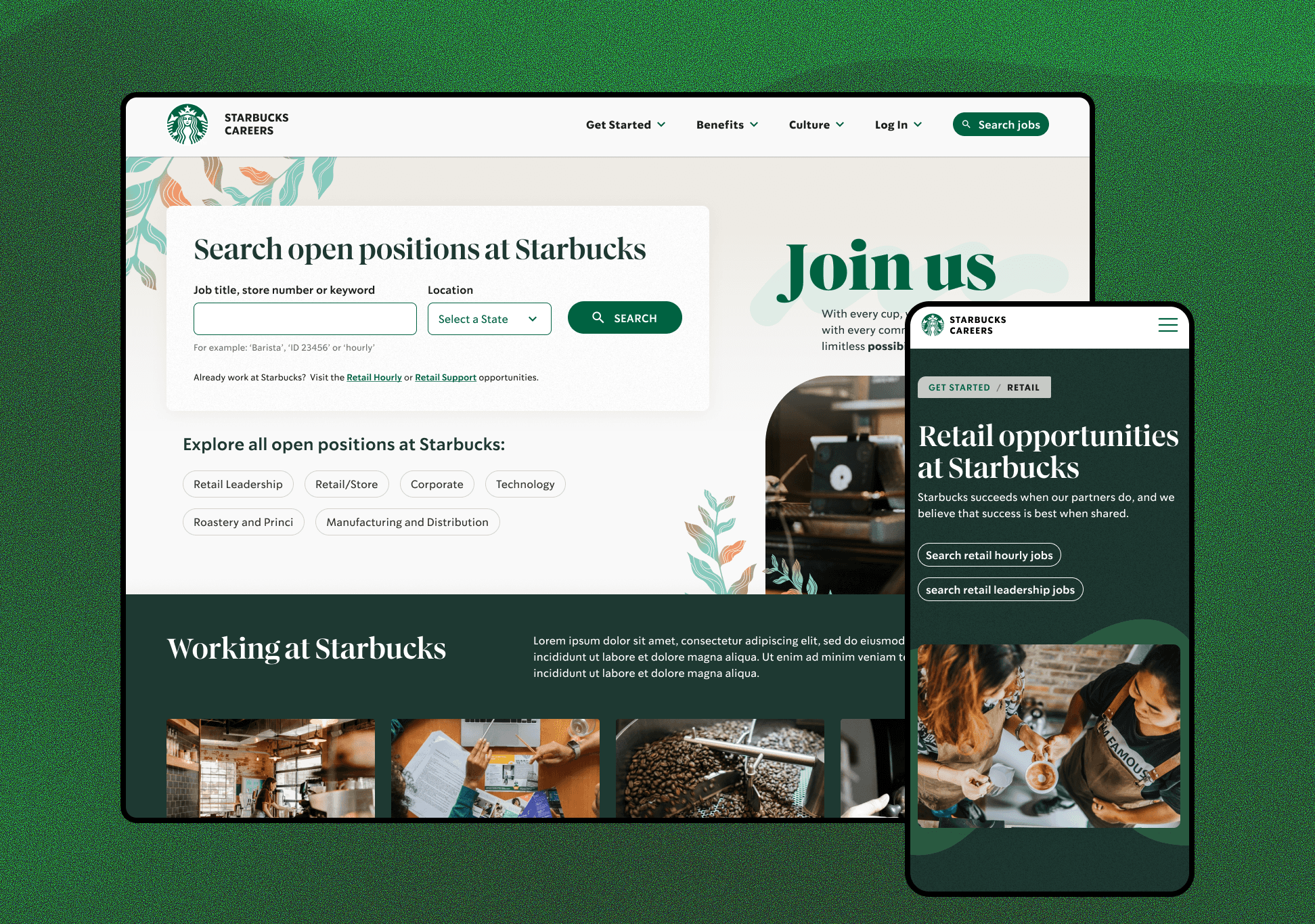
Background
Starbucks set out to unify its North American recruitment experience for the US and Canada by moving to the Eightfold.ai talent platform. At the same time, the company was rapidly expanding its technology organization in Seattle and competing for talent with employers like Microsoft and Amazon, while still needing to serve a predominantly frontline workforce that represented about 90% of open roles.
Core problem
The existing careers experience was embedded inside the main Starbucks.com site alongside consumer experiences like online ordering, creating a confusing, multi-level navigation structure that often misled or overwhelmed candidates. Candidates and recent hires frequently reported difficulty finding the right information, including job openings and benefits, and the internal term “partners” (used for employees) was poorly understood by external visitors, causing confusion around labels like “partner benefits” and “partner resources.”
Reimagining the Starbucks careers experience end-to-end
Research and discovery
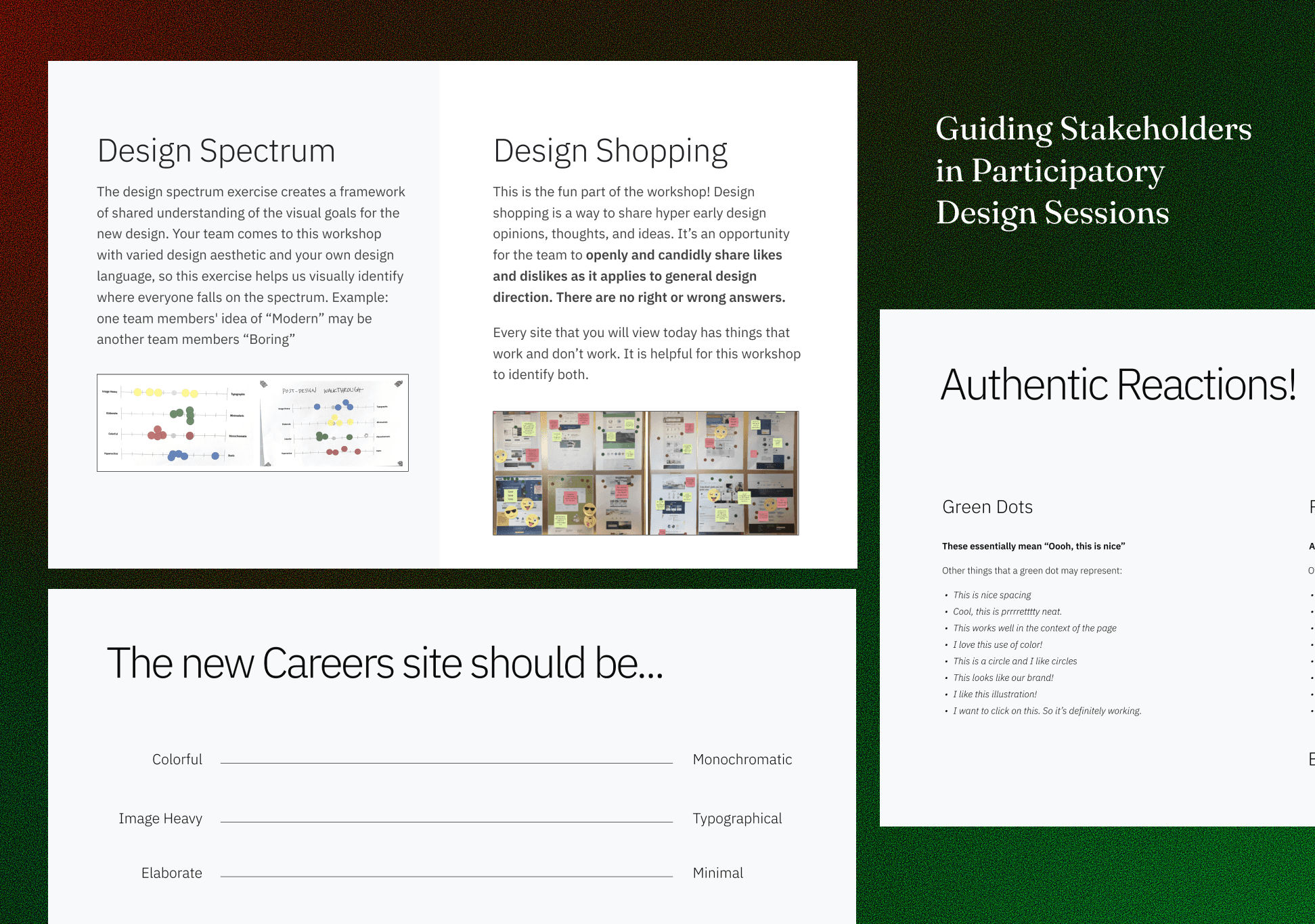
The project began with competitive research across other food and beverage brands, paired with content and design strategy workshops with key Starbucks stakeholders. The team also interviewed recently hired employees across both technology and coffee-shop roles to understand qualitative issues, from navigation problems to tone and clarity gaps in the careers experience.
Clarifying language and structure
A pivotal insight was that many candidates did not understand that Starbucks calls all employees “partners,” which made core content like “partner benefits” confusing even for some newly hired staff. This was solved by surfacing a clear explanation of the “partner” terminology early and prominently in user flows so that the language felt inclusive and intuitive rather than opaque.
UX, IA, and visual design
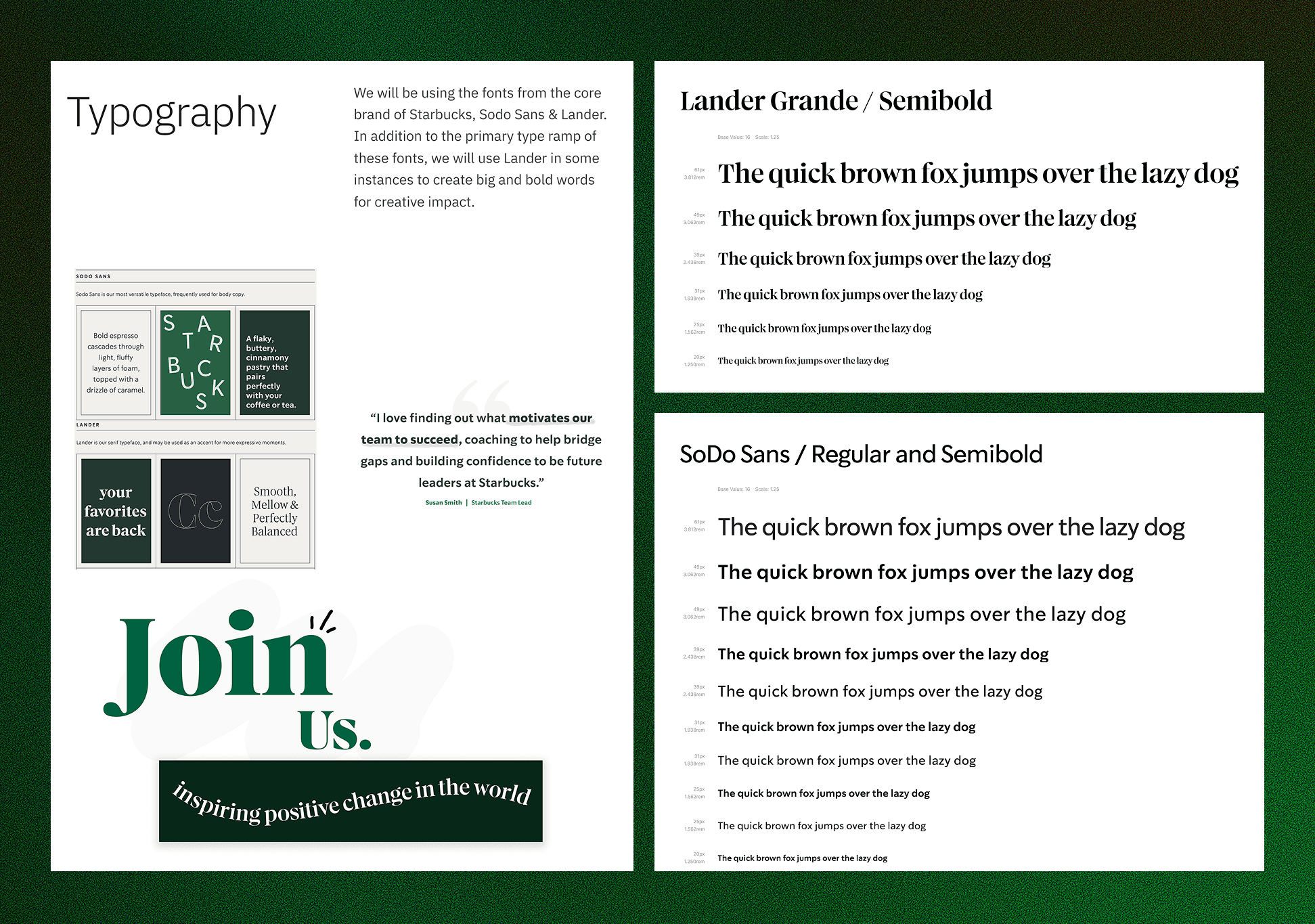
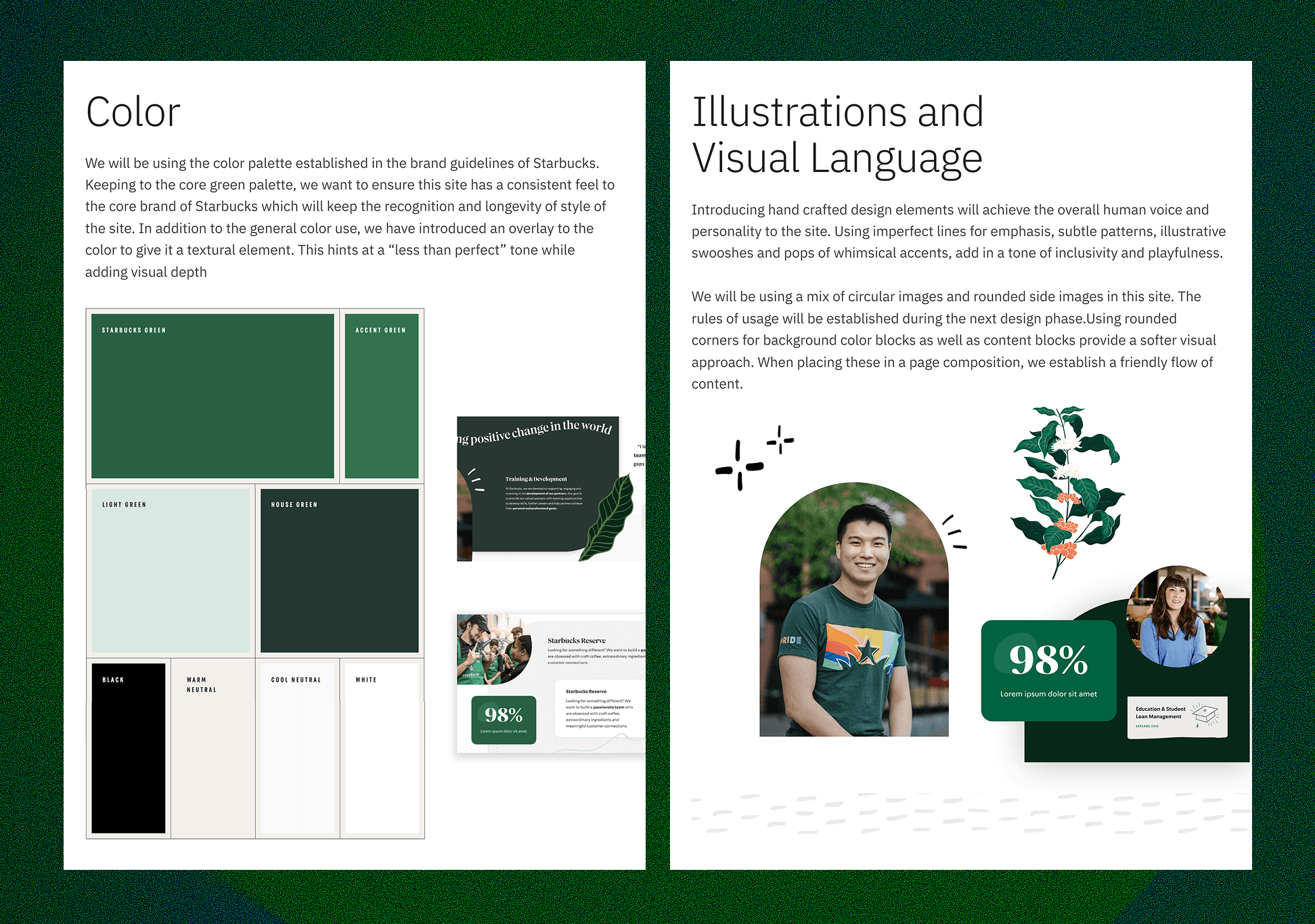
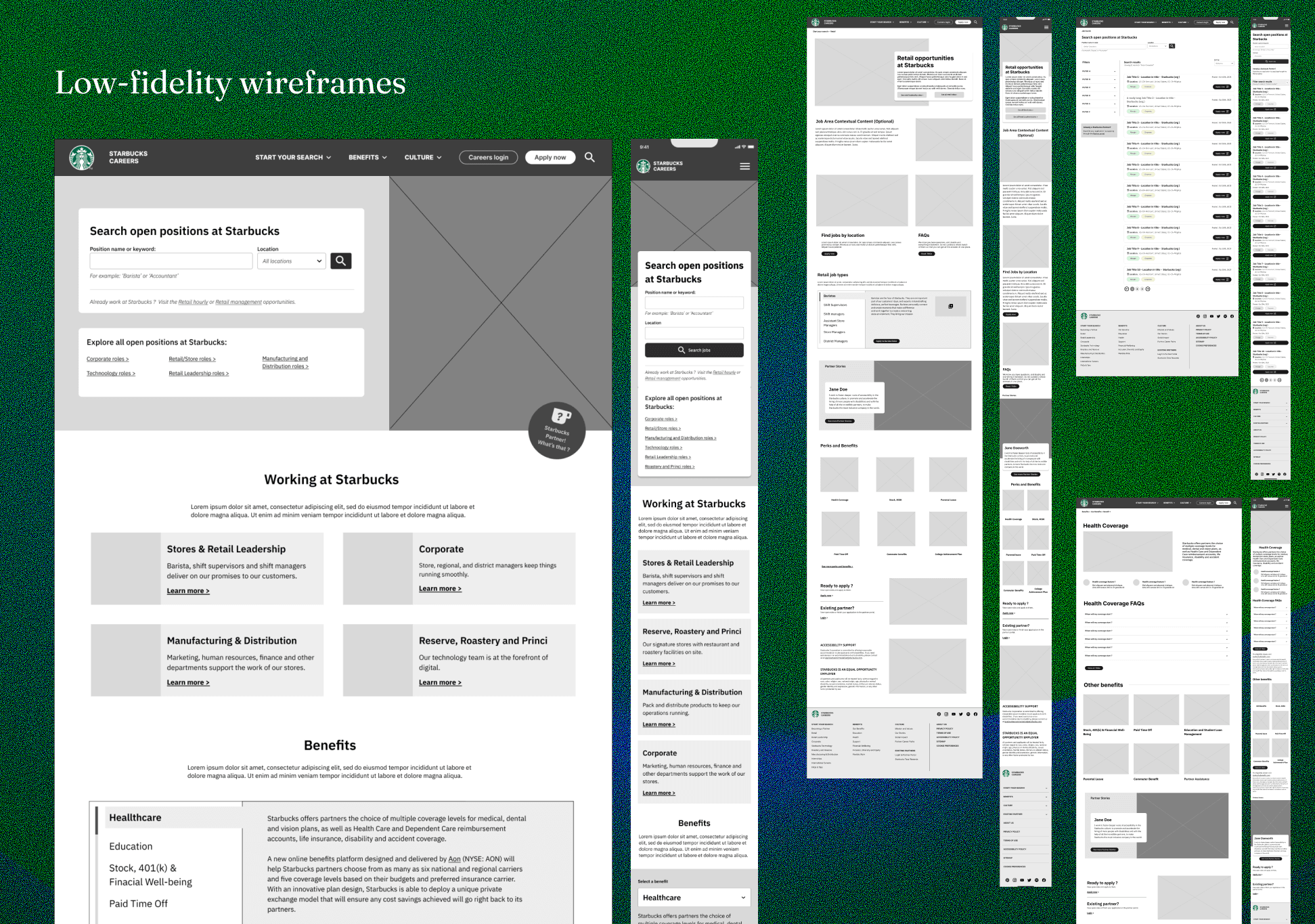
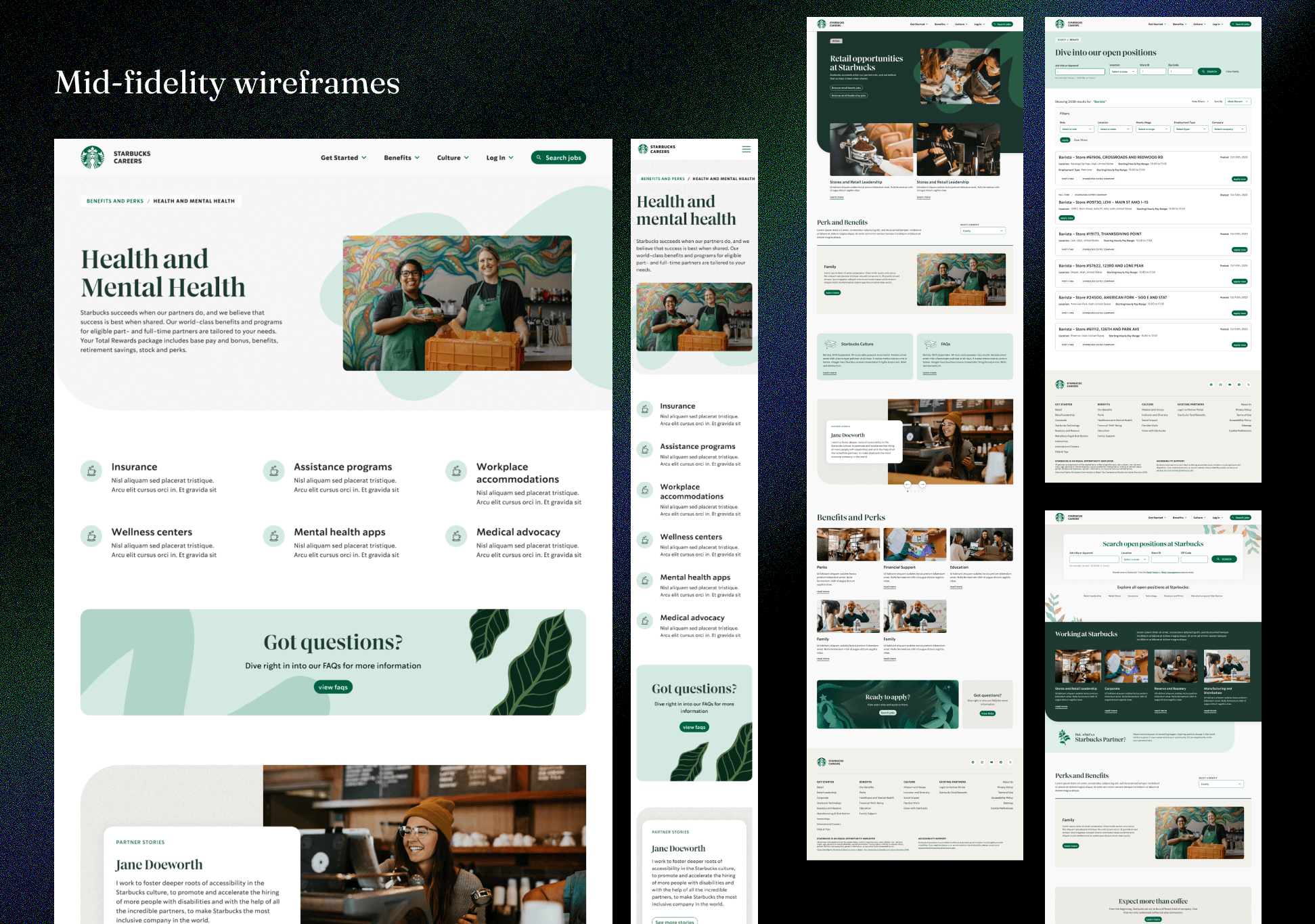
Content structure was explored through wireframes in parallel with visual design strategy developed via moodboards, allowing the team to quickly converge on design language and guidelines. Multiple rounds of wireframe-level redesigns enabled testing and refinement of the information architecture, ensuring that navigation, search, and access to openings and benefits information were straightforward before committing to high-fidelity design.
Component library and implementation readiness
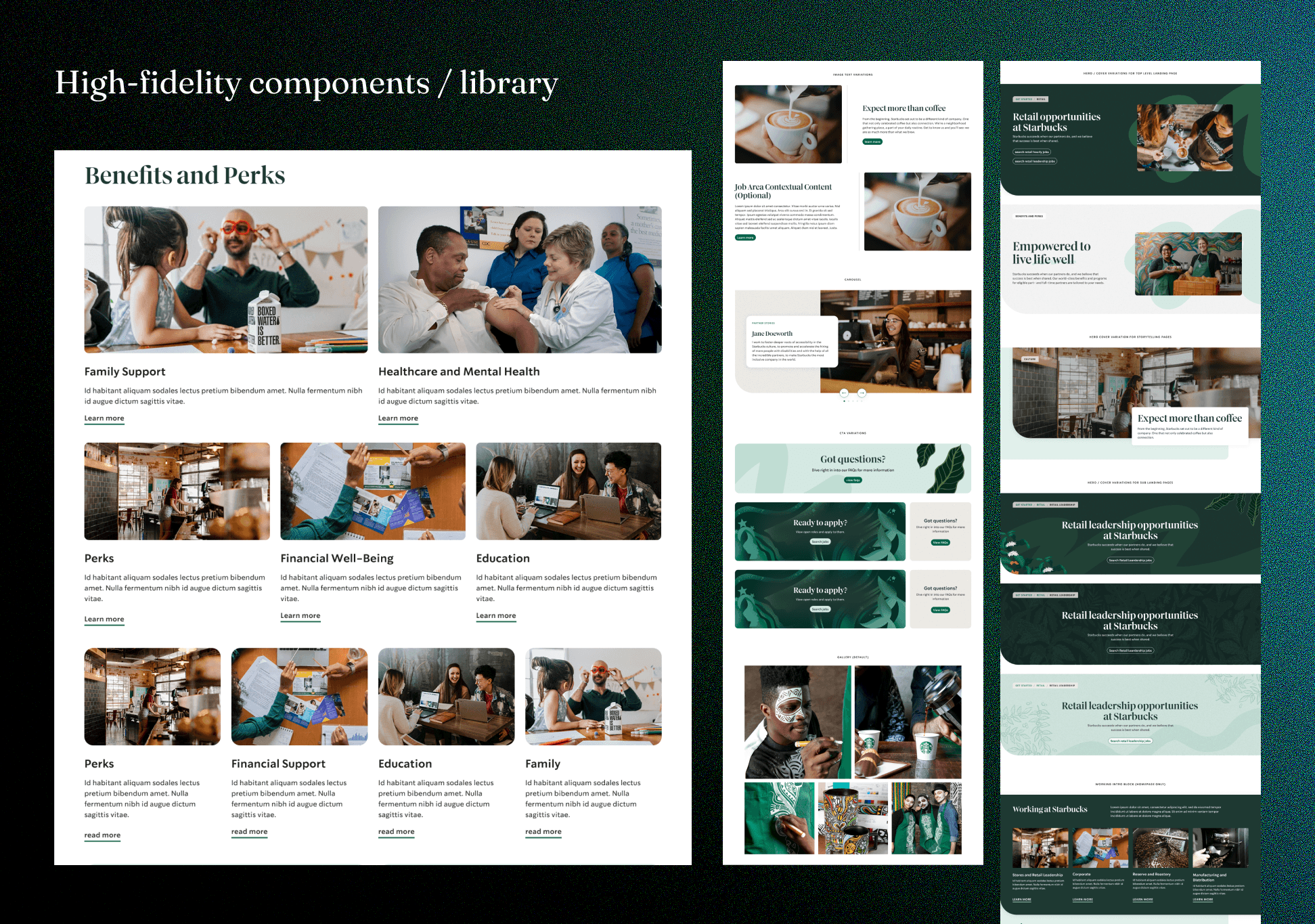
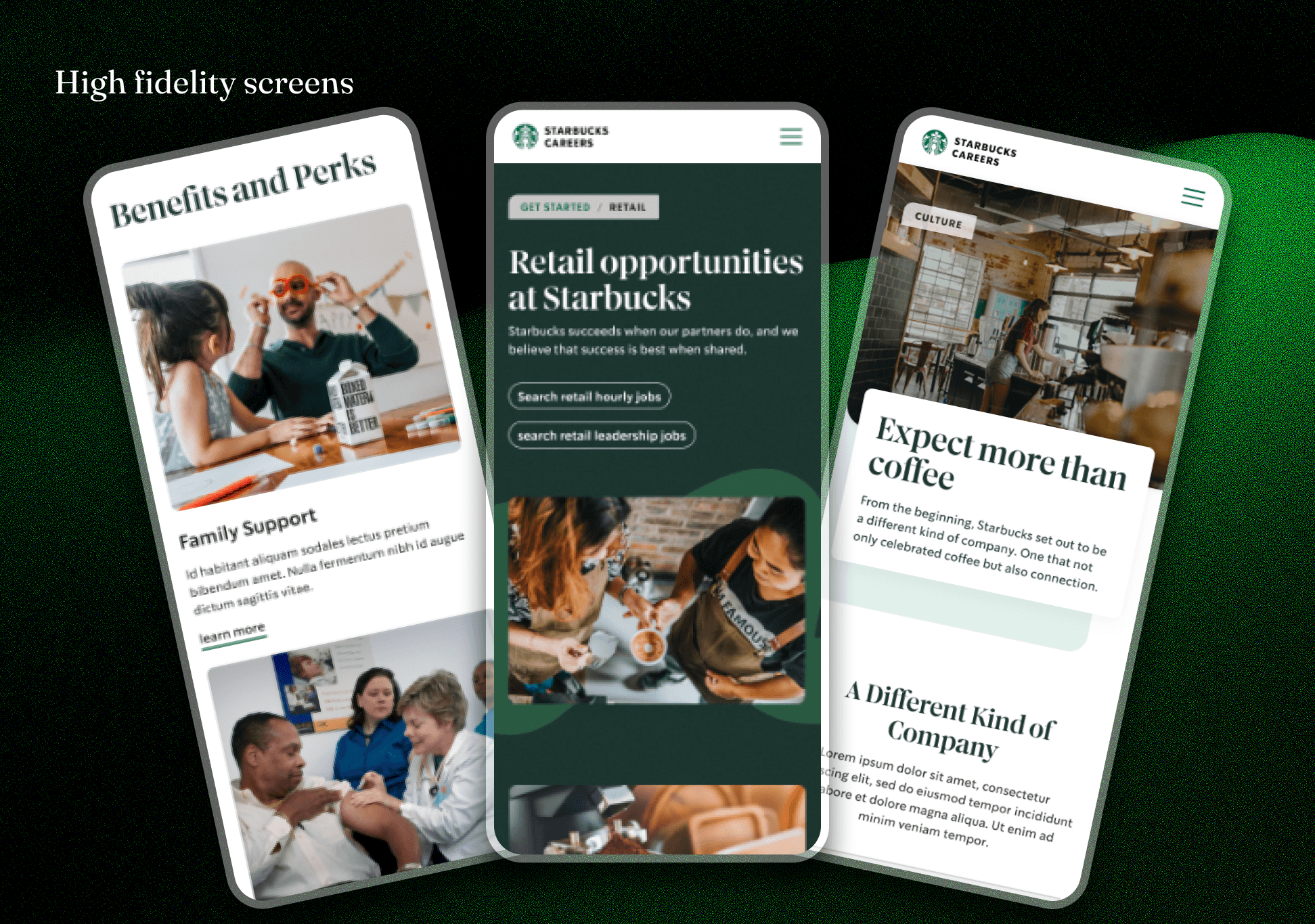
Once the IA and flows were validated, the team designed a library of reusable page components that could be easily themed for different campaigns or hiring needs using configurable colors, illustrations, and styling. These components were built to work in a plug-and-play model with the CMS, enabling Starbucks to compose new pages and experiences without breaking content structure or consistency.
Usability testing before launch
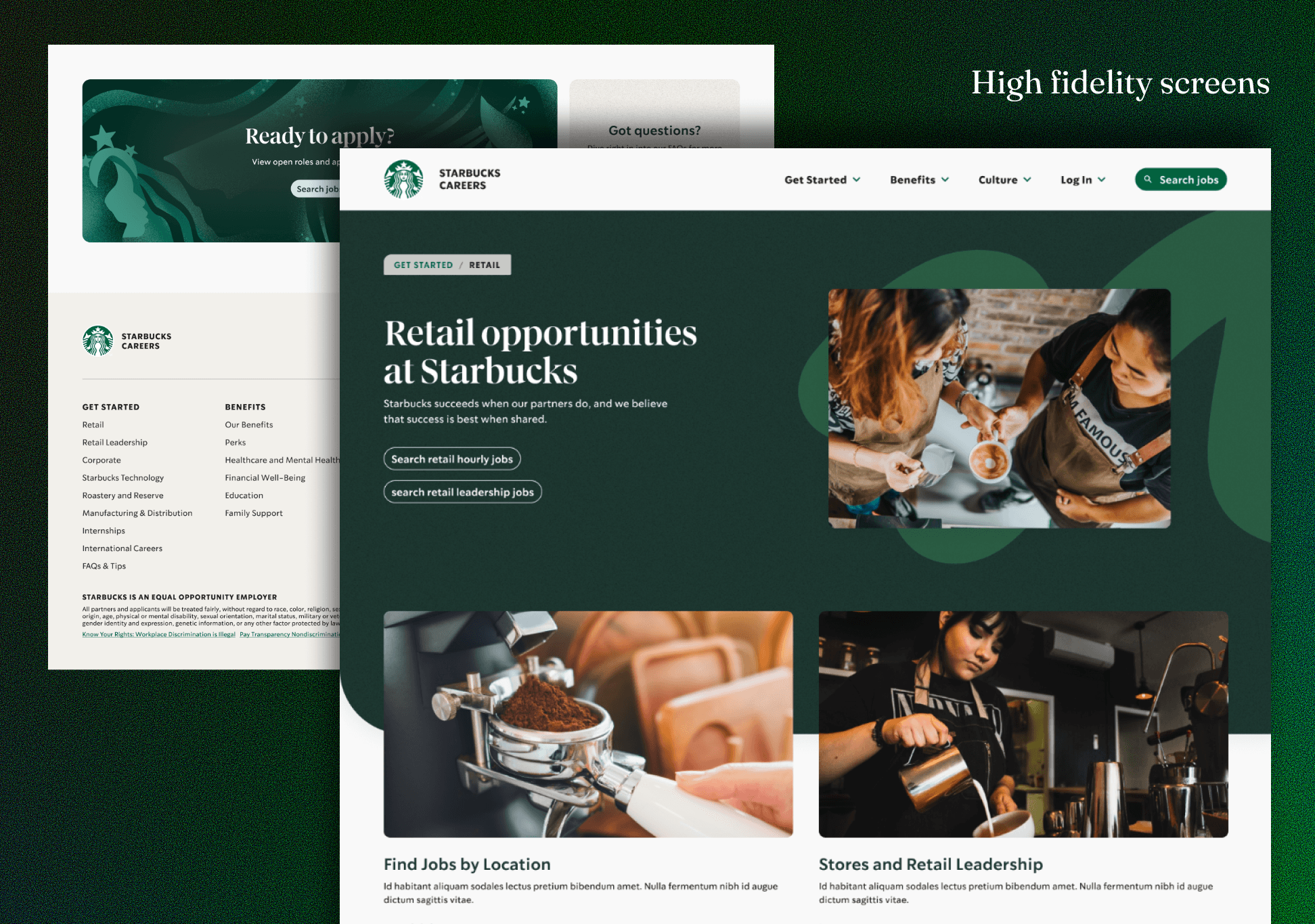
The final experience was tested using the same key tasks as the original careers flow, allowing for direct comparison of performance and user sentiment. Testing showed a marked improvement in usability and in candidates’ confidence that they had successfully completed tasks such as finding roles or benefits information.
Results and Impact
The team successfully convinced Starbucks to move careers into its own subdomain as a distinct destination, rather than keeping it embedded within the main Starbucks.com site, which reduced navigation complexity and enabled the introduction of a dedicated “supermenu” tailored to candidate needs. This structural change created clearer boundaries between consumer and careers journeys, improving overall clarity and control over the recruitment experience.
Usability testing demonstrated about a 45% reduction in the time required to find benefits information and roughly a 66% reduction in the time required to view a list of job openings when searching by keyword. Qualitatively, average user confidence in “whether they completed the task successfully” increased from 4.2/10 on the original site to 8.5/10 on the redesigned experience, effectively doubling perceived success and clarity.